How to set up a backyard beanbag toss game for beginners
· Editorial team newswithgracehouston.com
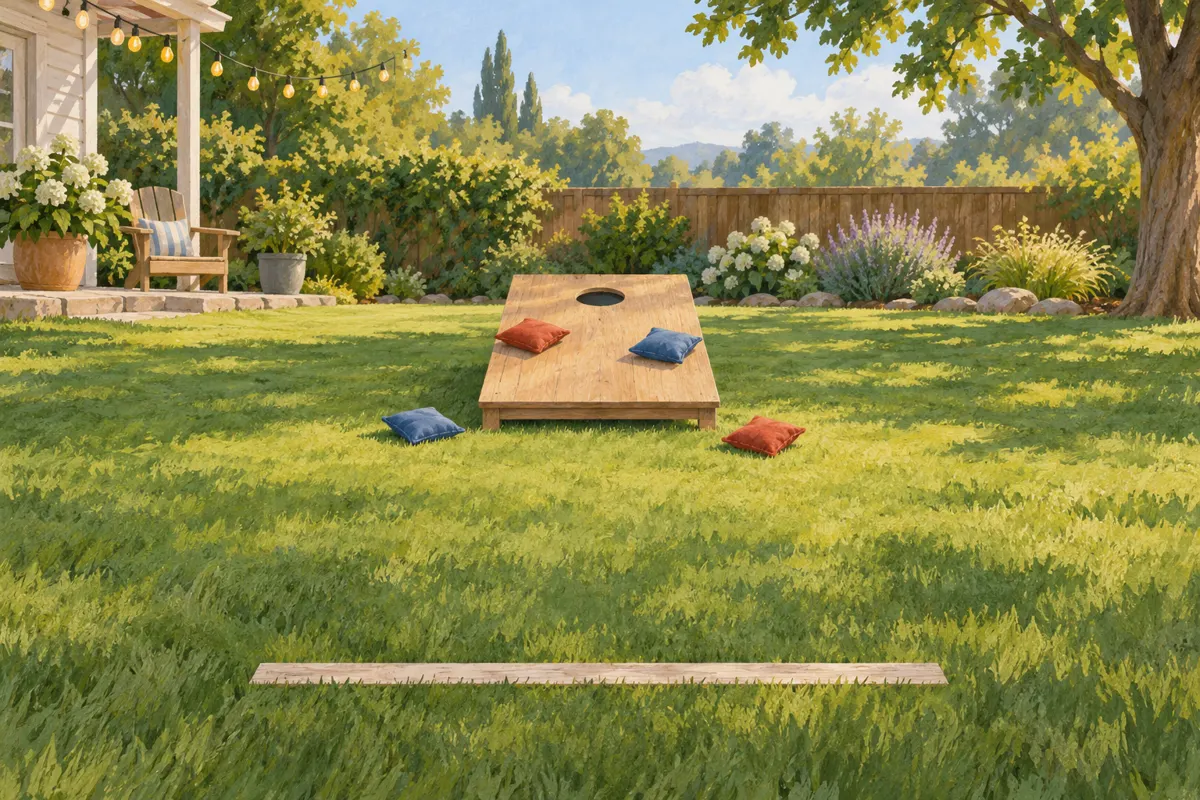
To set up backyard beanbag toss, place a stable target on level ground, mark a throwing line, and agree on scoring before anyone throws. Give each player the same number of bags and turns. For a first game, the proposed house rules below keep play simple and let you adjust the distance to suit your yard.
Choose a target and gather your bags
You can use a beanbag toss board you already own or make a simple target from household materials. WeAllSew collects backyard game ideas using picnic plates, cardboard boxes, and fabric targets. Pick one target style for your first session so everyone can easily recognize a successful throw.
- Four beanbags, ideally similar in size and weight.
- One stable board, open cardboard box, or other clearly defined target.
- A visible throwing-line marker, such as chalk on paving or a flat marker on grass.
- Paper and a pencil to record scores.
If you want to make bags, Habitot suggests old socks without holes and dry filling such as rice, popcorn kernels, or beans. Secure the opening before play and check that filling cannot escape. Keep homemade bags dry, and set aside any bag that starts leaking.
Set up a clear throwing area
Choose a level patch with room for the target, the thrower, and waiting players. Remove objects that could trip someone walking to collect bags. Position the target so missed throws stay away from windows, fragile items, and places where people regularly walk.
- Place the target securely and check that it does not rock or slide.
- Mark a starting line at a comfortable throwing distance.
- Give every player a few practice throws. Move the line closer if reaching the target takes a forceful throw.
- Choose a waiting spot beside or behind the thrower, clear of the throwing path.
- Agree that everyone waits until throwing stops before collecting bags.
Follow the setup instructions for a purchased game. Beanbag games vary: the BOSSTOSS/AHOLES portable game, for example, specifies an elevated board and its own throwing distance. Those measurements belong to that particular product; they do not establish a universal backyard setup.
Agree on simple scoring
For beginners, we propose adding each player's points directly to their running total. With a board that has a hole, use the house scoring below. These are suggested backyard rules, rather than a statement of official cornhole rules.
- A bag that goes through the hole earns three points.
- A bag resting entirely on the board earns one point.
- A bag on the ground or touching the ground earns zero points.
- Count positions after all four bags have been thrown, so a later throw can change an earlier bag's result.
For an open box target, simplify further: award one point for each bag that finishes inside. We propose playing five rounds, with the highest total winning. A fixed number of rounds gives everyone equal turns and avoids arguments about needing an exact finishing score. If totals tie, share the win or give tied players one extra four-bag turn each.
Take turns and practice a comfortable toss
The BOSSTOSS/AHOLES game uses turns in which a player throws four bags before passing them to the next player. That sequence also works for the proposed beginner game: choose a player order, keep it throughout the game, and complete everyone's turn before starting another round.
- Stand behind your assigned line with a balanced stance.
- Hold one bag comfortably and try a gentle underhand swing.
- Aim at the same part of the target for several throws, adjusting your force gradually.
- After your fourth throw, count the points aloud and record them.
- Collect the bags once the throwing area is clear, then pass them to the next player.
Adjust for a small yard or different abilities
For casual play, we propose adjusting the challenge before the scored rounds begin. A shorter throwing distance can make a small yard usable, while separate lines let players choose a manageable throw. Keep each person's chosen line consistent during that game.
- Move the line closer when players repeatedly fall short.
- Use a larger box opening when hitting a small hole is frustrating.
- Let players throw seated if that is more comfortable, with a clear throwing path.
- Try a cooperative round in which everyone's points contribute to one shared total.
Change only one feature at a time, then try another practice round. Once players can reach the target comfortably and understand the scoring, you have enough structure to start playing.