How to set up a rainy-day entryway when you have no mudroom
· Editorial team newswithgracehouston.com
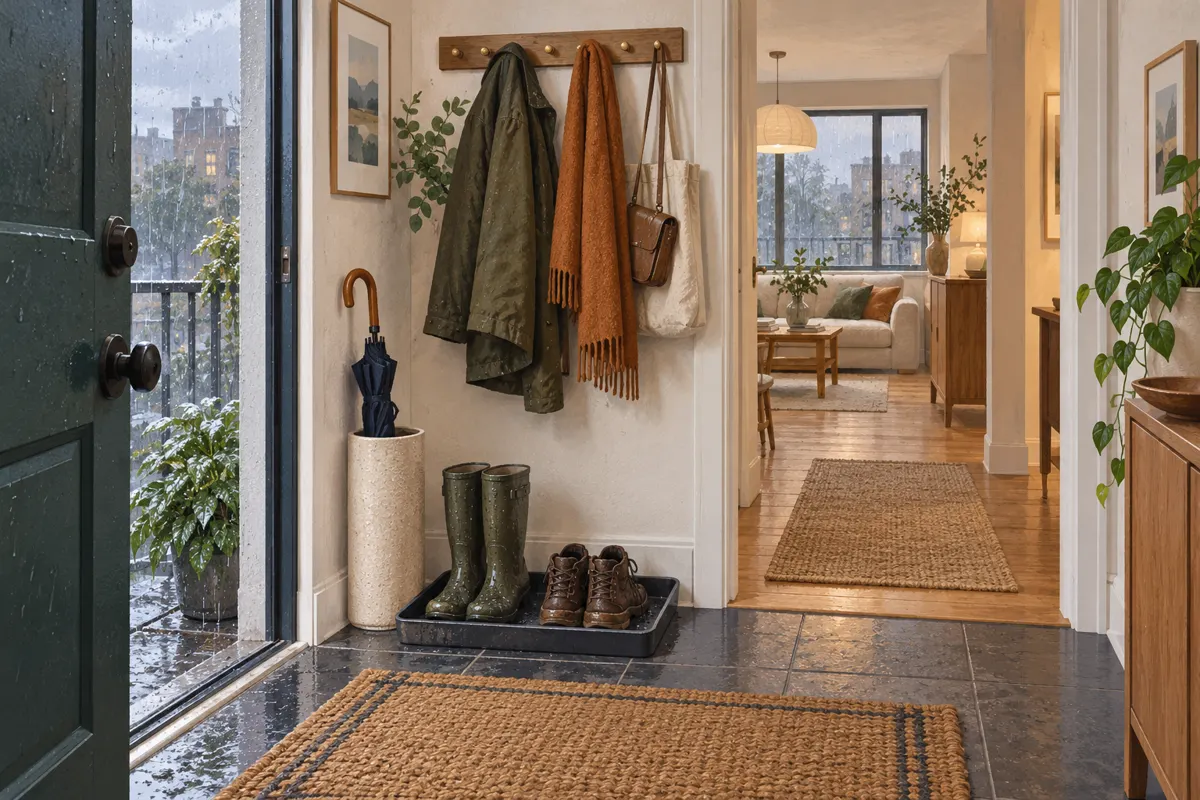
Set up a small wet-item zone just inside your door: a boot tray for dripping shoes, an umbrella holder that catches water and a washable mat for stepping out of wet footwear. Keep everything beside the walking route, with only the items you need for that day. The proposed setup below works as a removable arrangement for a small apartment entrance or compact foyer.
Choose a spot that keeps the doorway clear
Start by opening the door fully and watching where you naturally step, turn and put down your bag. That movement determines where the wet zone belongs. A narrow space beside the door may work better than the area directly in front of it. Avoid filling the entrance with furniture before you know what fits.
For this proposed layout, place the shoe tray along one wall, with umbrella storage beside it. Put the stepping mat where you can remove your shoes without standing in collected water. If the entrance is too tight, use the nearest suitable spot along the same wall rather than spreading wet items across the hallway.
- The door opens fully without catching the mat or hitting the tray.
- You can enter carrying a bag without stepping over shoes.
- The route into the home remains clear.
- Closet doors and nearby drawers still open.
- The tray and umbrella holder can be lifted for cleaning.
- Nothing extends into a shared corridor.
Give wet shoes a tray and a daily limit
A boot tray provides a designated place for rainy footwear and helps contain puddles. Choose one with a raised edge and enough room for the shoes that actually arrive wet. Check its outside dimensions against your available floor space; a tray that fits the footwear but blocks the door is too large for that location.
Our proposal is to reserve the tray for wet shoes only. Keep dry footwear on an existing rack, shelf or in a closet. In a shared household, assign each person a small portion of the tray or a nearby dry-storage spot. Once shoes have dried, move them out so the next arrival has somewhere to land.
Leave shoes upright with space between pairs instead of piling them together. If water collects beneath them, empty and wipe the tray. Follow the footwear maker’s care instructions for drying, especially for leather or other materials that need particular treatment.
Catch umbrella drips and hang everyday items
Give umbrellas their own water-catching container so they do not lean against the wall or drip onto dry shoes. For this proposed setup, use a stable holder with a removable drip insert, or a waterproof container you can easily empty. Check that a long umbrella cannot tip it over.
Treat the holder as a temporary landing spot. Once the umbrella stops dripping, move it somewhere suitable to open and dry without blocking movement. Let it dry before closing it for storage. If there is no room to open it at the entrance, choose another spot with floor protection.
Wall hooks can keep coats and bags off the floor while saving space. Assign hooks to household members if that makes the routine easier. Position dripping rainwear over water-catching protection and keep dry bags away from it. For removable hooks, check the stated load limit and surface requirements before hanging anything.
Use washable protection you can lift easily
The proposed floor protection is a washable mat beside the boot tray, giving you a place to stand while removing shoes. Choose a low-profile option that stays flat and has backing suitable for your floor. Confirm the door clears it and follow both the mat and flooring care instructions.
Keep the arrangement simple enough to lift regularly. After a wet arrival, check beneath the mat and tray for moisture. Hang a damp mat to dry and wipe the exposed floor as needed. Avoid adding several overlapping rugs: they make the setup harder to clean and can interfere with the door.
Make drying and resetting part of coming home
- Place the dripping umbrella in its holder and wet shoes in the tray.
- Hang rainwear where its drips can be caught, away from dry belongings.
- Wipe up water that has escaped onto the floor.
- When dripping stops, empty collected water and move items into suitable drying positions.
- Once everything is dry, return shoes and umbrellas to storage, then wipe and reset the wet zone.
If the tray repeatedly overflows with footwear, reduce the dry shoes left at the entrance before adding storage. A useful rainy-day entryway needs a clear place to arrive, a place to catch water and a routine that frees those spaces for tomorrow.